Before the Stasi reduced my life to arrest, interrogations and files, there was another part of my story: I was a trainee tailor, designing my own clothes and dreaming of a future in fashion.
Menswear — by a young man from Erfurt
During my training as an industrial tailor, I took a keen interest in menswear. I felt that it was neglected in East Germany, made many of my own clothes and wanted to become a fashion designer. My designs were meant to be bold but still wearable.
On 13 May 1988, the daily newspaper Junge Welt featured me and a suit I had designed under the headline “Fashion for men, by a man”. I had made the scarlet blazer with its black lining, gold buttons and lace handkerchief myself, as well as the striped trousers.
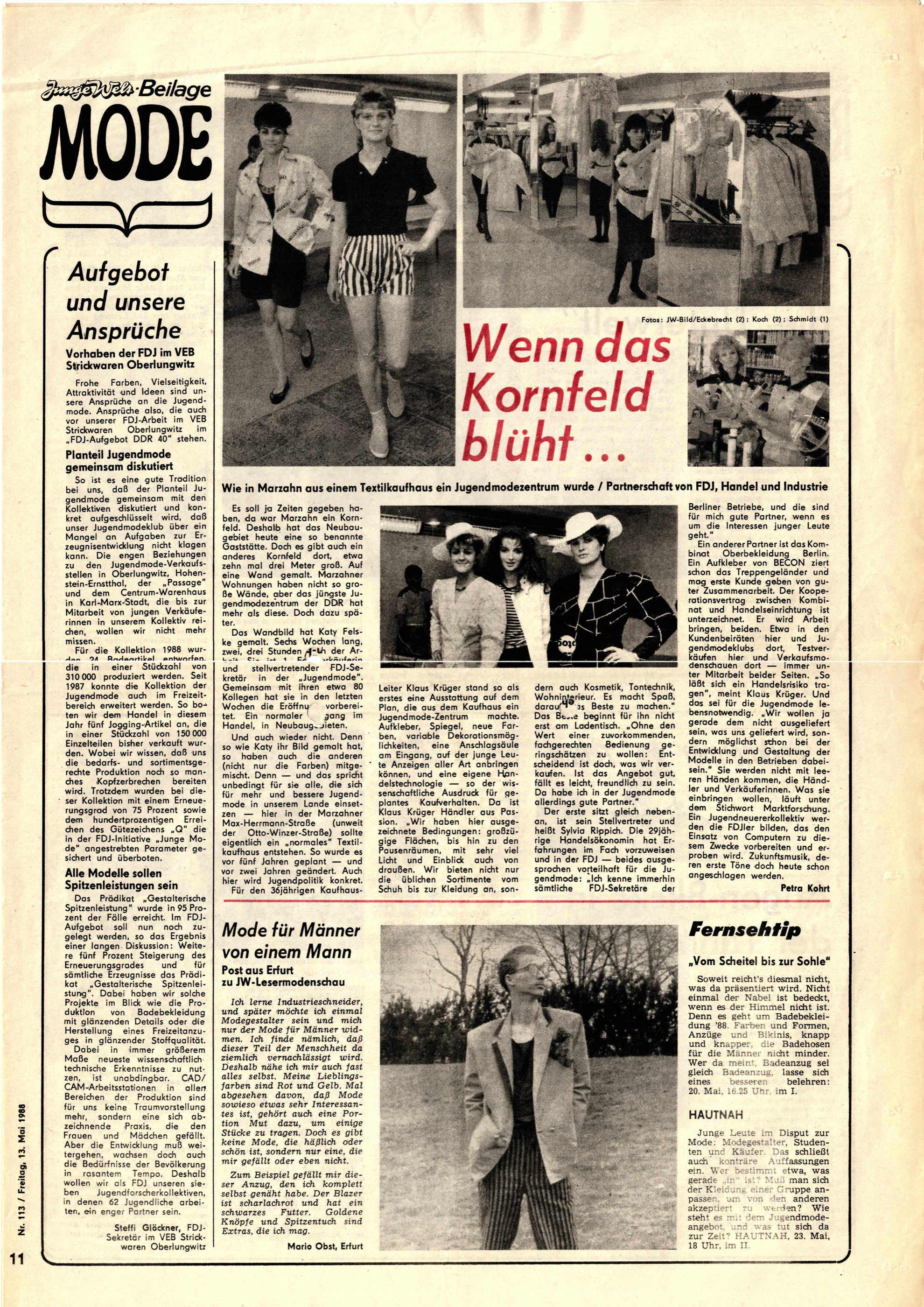
One of the prizewinners
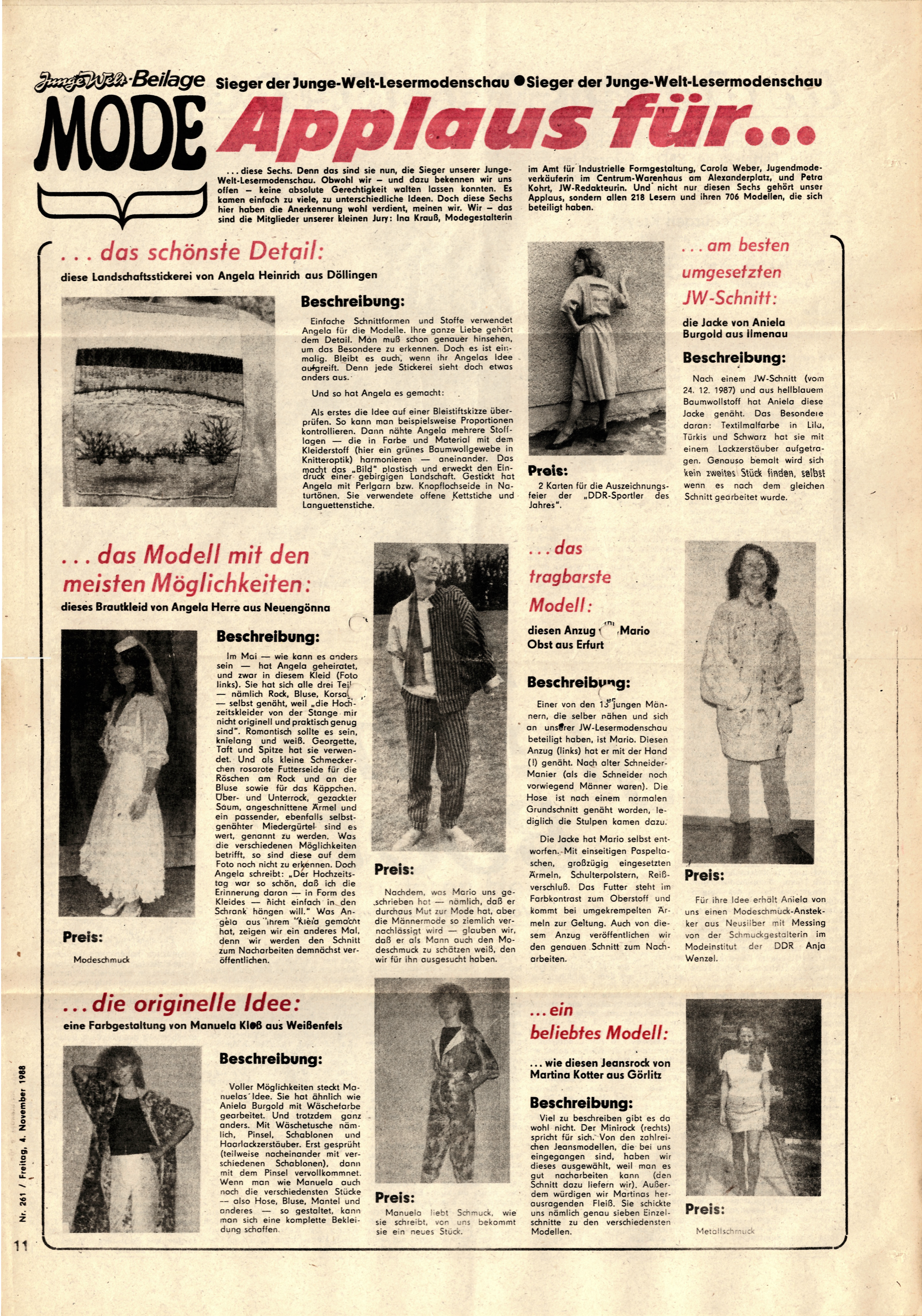
I entered my design in the Junge Welt readers’ fashion show. Among 13 young men who made their own clothes, my design won an award. In the issue of 4 November 1988, the editors described my suit as “the most wearable design”.
The trousers were based on a basic pattern to which I added cuffs. I designed the jacket myself, with single welt pockets, generously fitted sleeves, shoulder pads, a zip and a contrasting lining. Following traditional tailoring methods, I made most of the suit by hand.
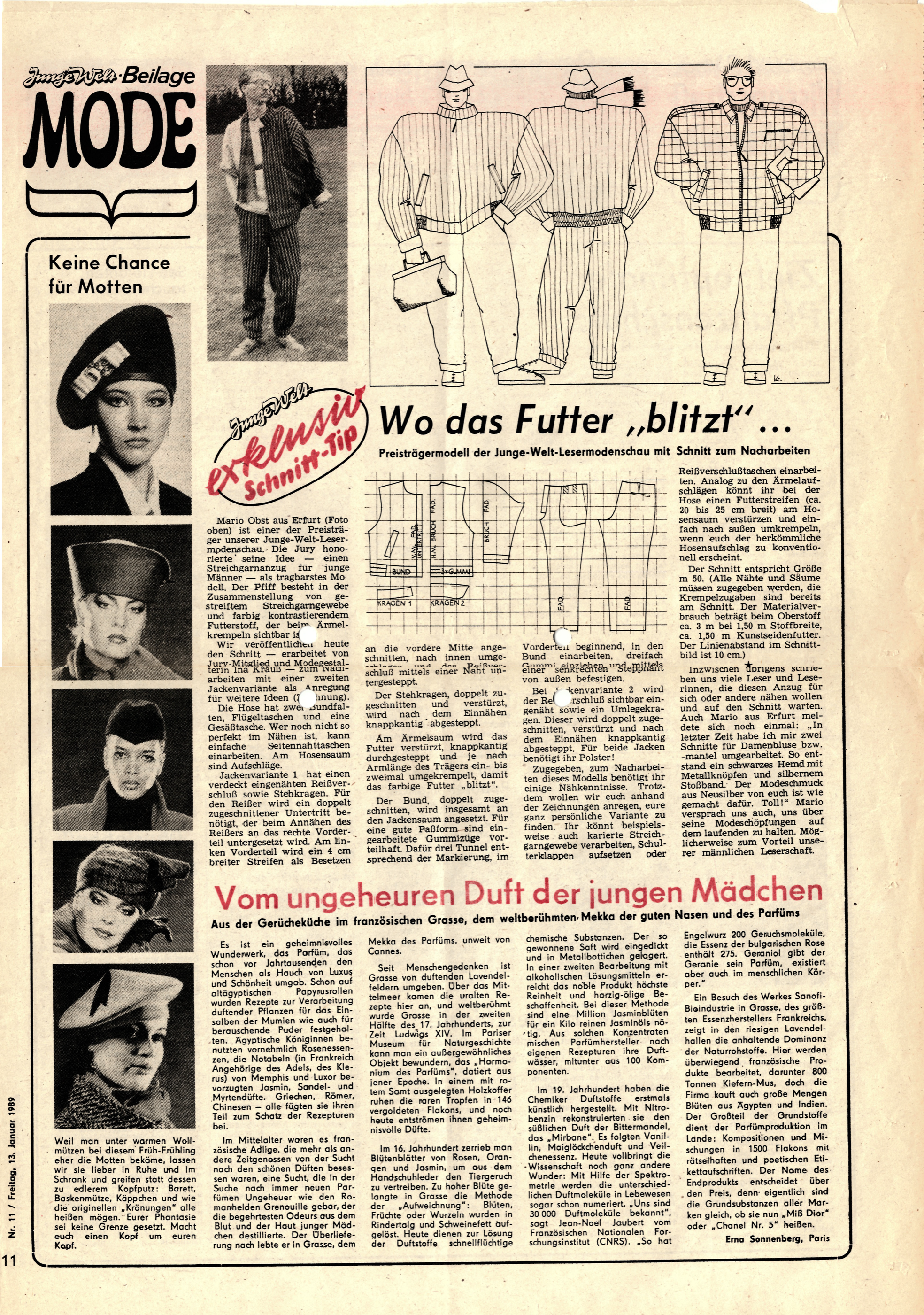
A pattern so others could make my design
On 13 January 1989, my prizewinning design appeared again in the fashion supplement of Junge Welt, this time with drawings and a sewing pattern. The jury praised my idea for a suit in striped fabric for young men. For me, this publication was a special affirmation: my own idea had become a design that other people could make.
Why I wanted to go to Paris
This success strengthened my desire to think about fashion beyond East Germany’s narrow boundaries. To me, Paris was the city of fashion: a place where creativity, craftsmanship and a free life seemed to come together.
In East Berlin, I therefore applied for a trip to Paris through Jugendtourist, the travel agency of the East German youth organisation, the FDJ. My application was refused without any explanation. To me, it was more than a rejected travel request. It showed me once again that even a personal and professional dream depended on what the state allowed.
My wish to go to Paris and pursue a future in fashion was therefore closely bound up with my wish for freedom. A few weeks after the final publication of my prizewinning design, I was arrested on 14 February 1989 — two days before I intended to carry out my escape plan.