Voluntary educational work
My work as an eyewitness
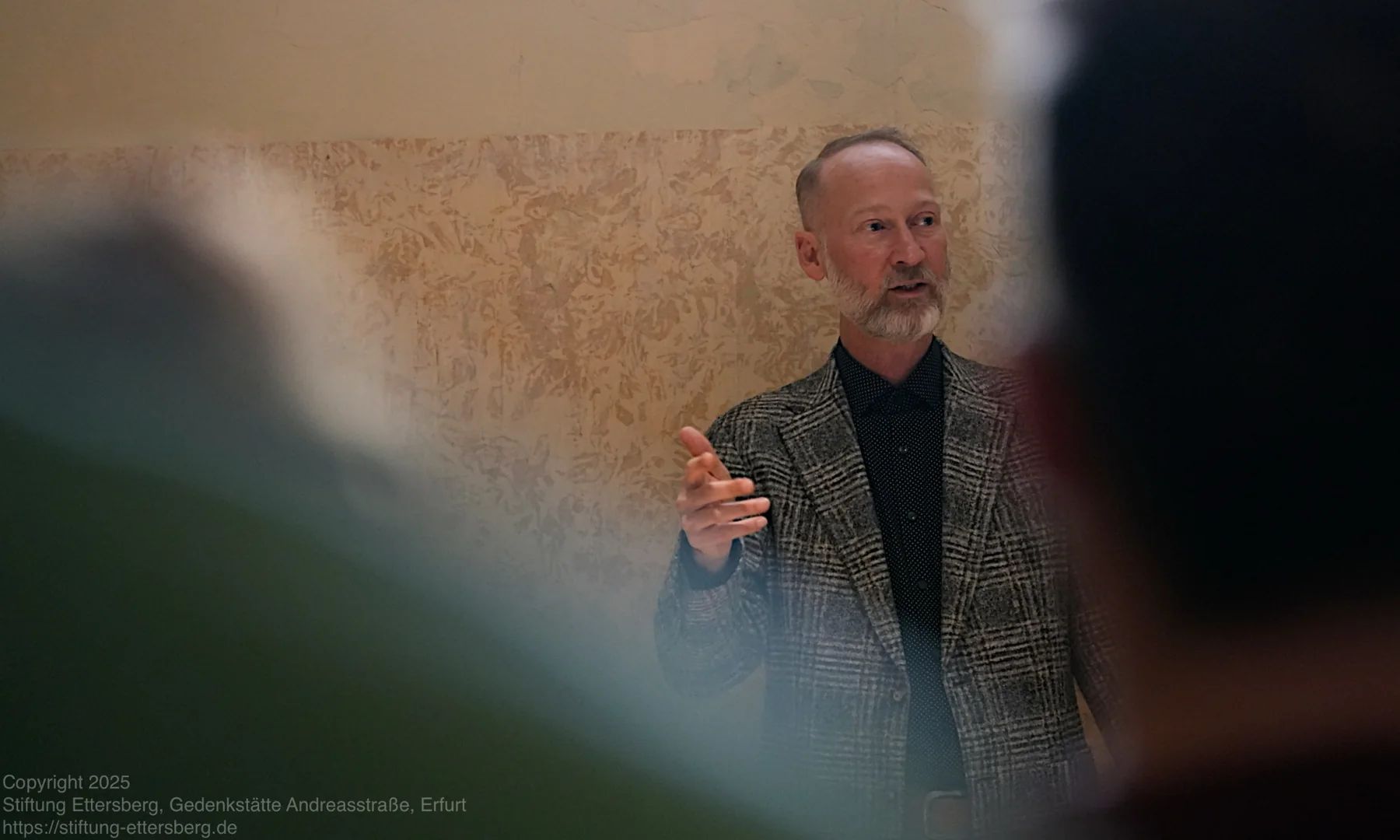
Passing on memories
I cannot change the past. But I can tell people what happened, and help young people understand what the absence of freedom means for an individual.
Returning to Erfurt
A place of imprisonment became a place of learning.
After more than 30 years, I returned to Erfurt, primarily because of my parents. I wanted to share some of the time we still had together.
During a later visit to Andreasstraße, I contacted the memorial and education centre run by Stiftung Ettersberg. I had been imprisoned at this very place in 1989. A new chapter of my story now began there: I spoke about my experiences and agreed to contribute to the memorial’s educational work.
Today, I meet school pupils and young people from Germany and other countries. I tell them about my life in East Germany, my wish for freedom, my arrest and political imprisonment. Above all, I answer their questions. An encounter with an eyewitness comes alive through open exchange as well as storytelling.
Stages in my work as an eyewitness
From personal accounts to lasting remembrance.
My eyewitness interview
The memorial recorded my life story in an extensive interview. The 2024 annual report of Stiftung Ettersberg subsequently introduced me as one of its new eyewitnesses and announced my involvement in interactive discussions.
Heritage Open Day
Together with the memorial’s director, Dr Jochen Voit, I guided visitors through the former prison wing. Speaking in the place where I was once locked up connects my personal memories directly with historical education.
My life story at the new interactive media table
A new media installation opened on the former prison floor. At the digital media table, visitors can explore 31 researched biographies from the prison’s history. My own life story is now among them, permanently accessible at the historical site.
In Germany and internationally
History becomes tangible when people talk to one another.
These discussions bring me into contact with more than school classes from Thuringia and other parts of Germany. International youth groups also visit Andreasstraße. During the Erasmus+ project “Shared Memory”, for example, I spoke with young people from Germany and Czechia about political imprisonment, freedom and why remembrance is still necessary today.
Every honest question is welcome. Young people in particular should be free to disagree, ask further questions and develop their own ideas.
My story should not become a closed account behind glass. It should help people understand dictatorship, actively practise democracy and recognise that freedom cannot be taken for granted.
Eyewitness discussions
Remembrance needs personal encounters.
Would you like to learn more about my educational work or get in touch?
Send a message