6 September 1976
6 September 1976 — a day I will never forget. Not only because that Monday was the day I officially became a schoolchild, but also because of one particular item of clothing: my patent-leather shoes.
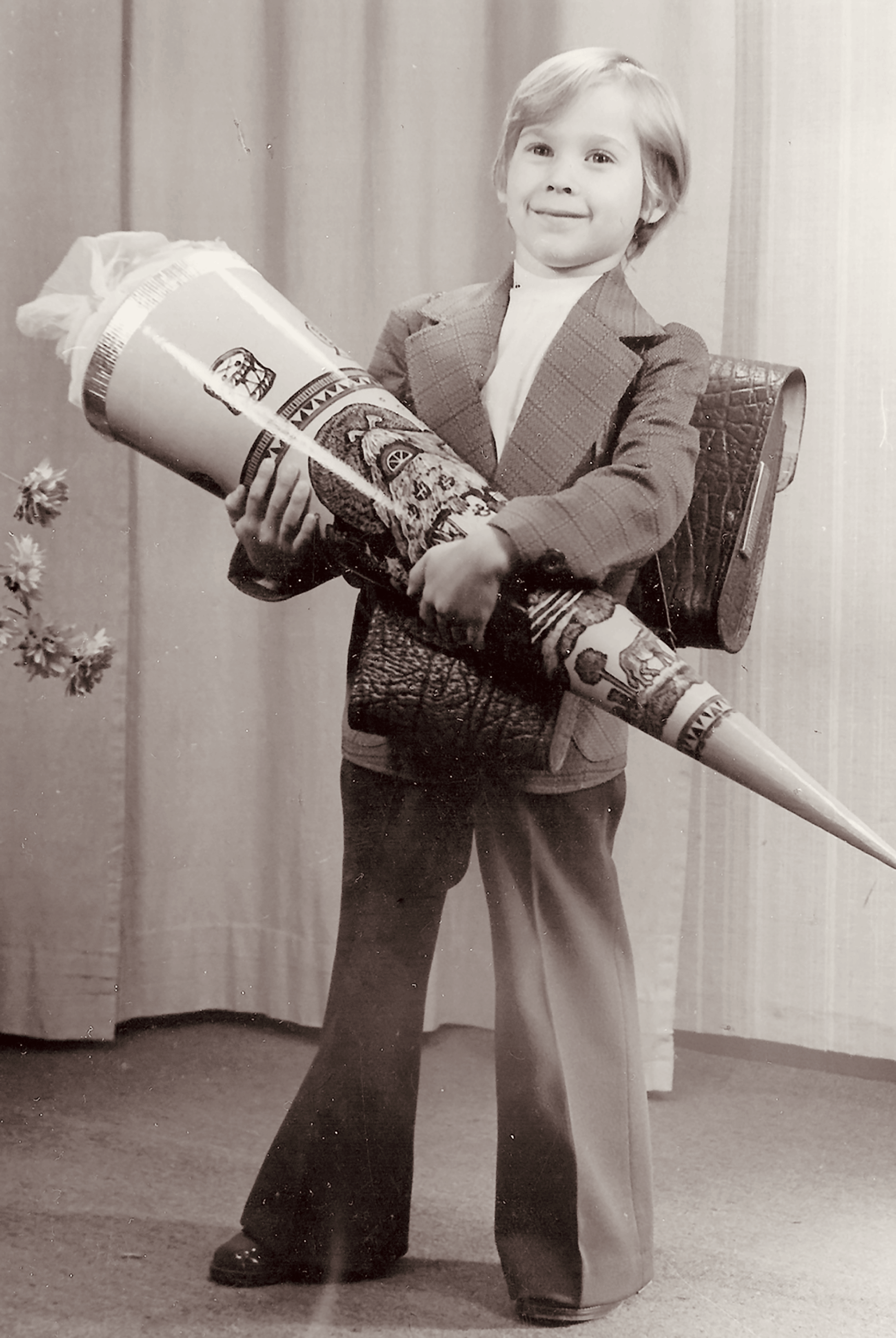
I had been given them especially for this important day. Shiny black, stiff and — as I soon discovered — thoroughly uncomfortable. After just the first hour, my feet were hurting, but I had to be brave. After all, this was my big day! Having to wear them until the evening was a real ordeal. So it was not just the classroom or the ceremonial speeches that stayed in my memory — above all, it was the stabbing pain in my toes.
There was also the enormous cone of sweets, at least as tall as I was. It was packed to the brim with sweets, chocolate and all sorts of sugary treats. As heavy as a brick — but, of course, I never put it down for a second. It was my pride and joy.
Despite the tight shoes and all that carrying, it was a special day. The beginning of a new chapter — with blue neckerchiefs for the Young Pioneers, freshly sharpened pencils and a whole world of questions and curiosity.
Starting school in the GDR — looking back at Erfurt in 1976
Starting school was a significant step for every child in the GDR — not just a new stage of life, but also a festive occasion for the family. Anyone who started school in Erfurt in 1976 may still remember the colourful cones of sweets, the fanfares of the Free German Youth and the solemn ceremony of that first day.
A state-organised ceremony
The school year in the GDR always began on 1 September or the following Monday. The ceremony for new pupils was usually held the day before lessons actually began, generally in late August or early September.
In Erfurt, as in other towns and cities, the ceremony usually took place in the school assembly hall or a cultural centre. The new pupils were welcomed with ceremonial music — often performed by pupils from Years 1 to 4, or even by members of the Free German Youth (FDJ).
The children arrived in their best clothes, often shirts and skirts or small suits. At the centre of it all was the generously filled cone of sweets, known as a Zuckertüte, an indispensable part of starting school in the GDR. It was both a symbol and a reward for the transition from nursery to school.
A welcome in the socialist spirit
The official welcome was often given by the headteacher or a party representative. Its language was clearly coloured by ideology: starting school was celebrated as a socially significant step as well as a personal one. The Young Pioneers were expected not only to learn to read and write, but also to grow into “socialist personalities”.
One particular ritual was tying the blue neckerchief. Many children were symbolically admitted to the Ernst Thälmann Pioneer Organisation on this day — an emotionally charged step closely associated with their identity as citizens of the GDR.
The first lesson
After the official ceremony, everyone went into the freshly cleaned classrooms. The class teacher was often already waiting — usually an experienced educator who would remain with the class until Year 4, or even Year 8. The first lesson was mainly about getting to know one another: writing down names, introducing the class mascot and sometimes singing the first song together.
Parents were there too — at least for this one important day. After that, everyday life in the socialist school system began for the children.